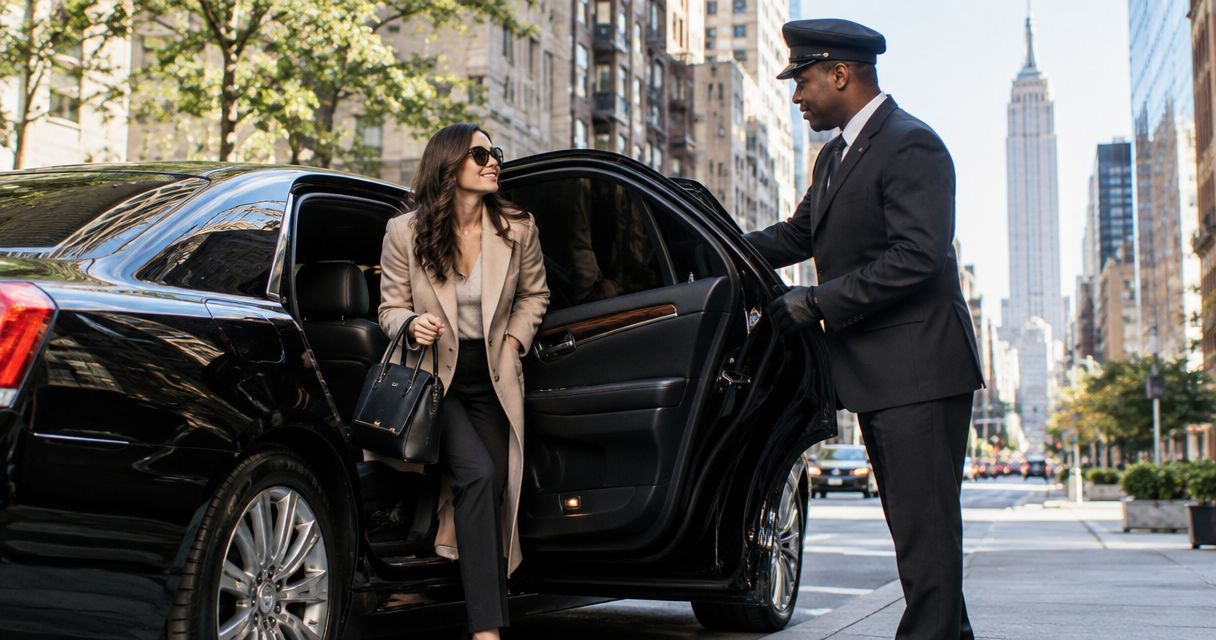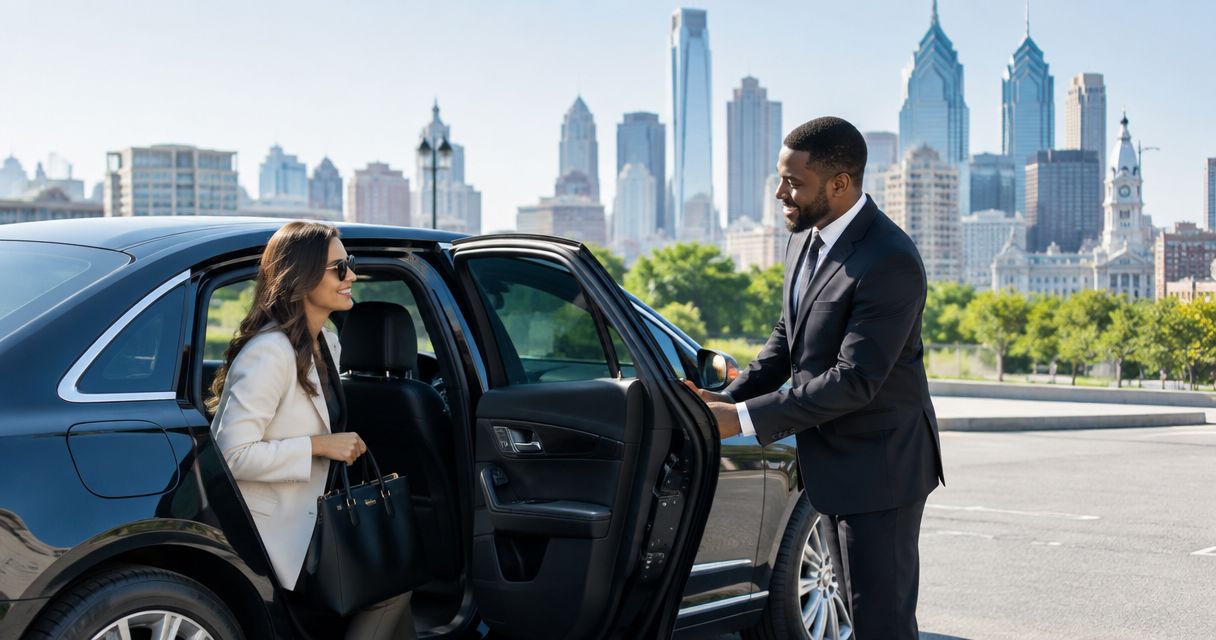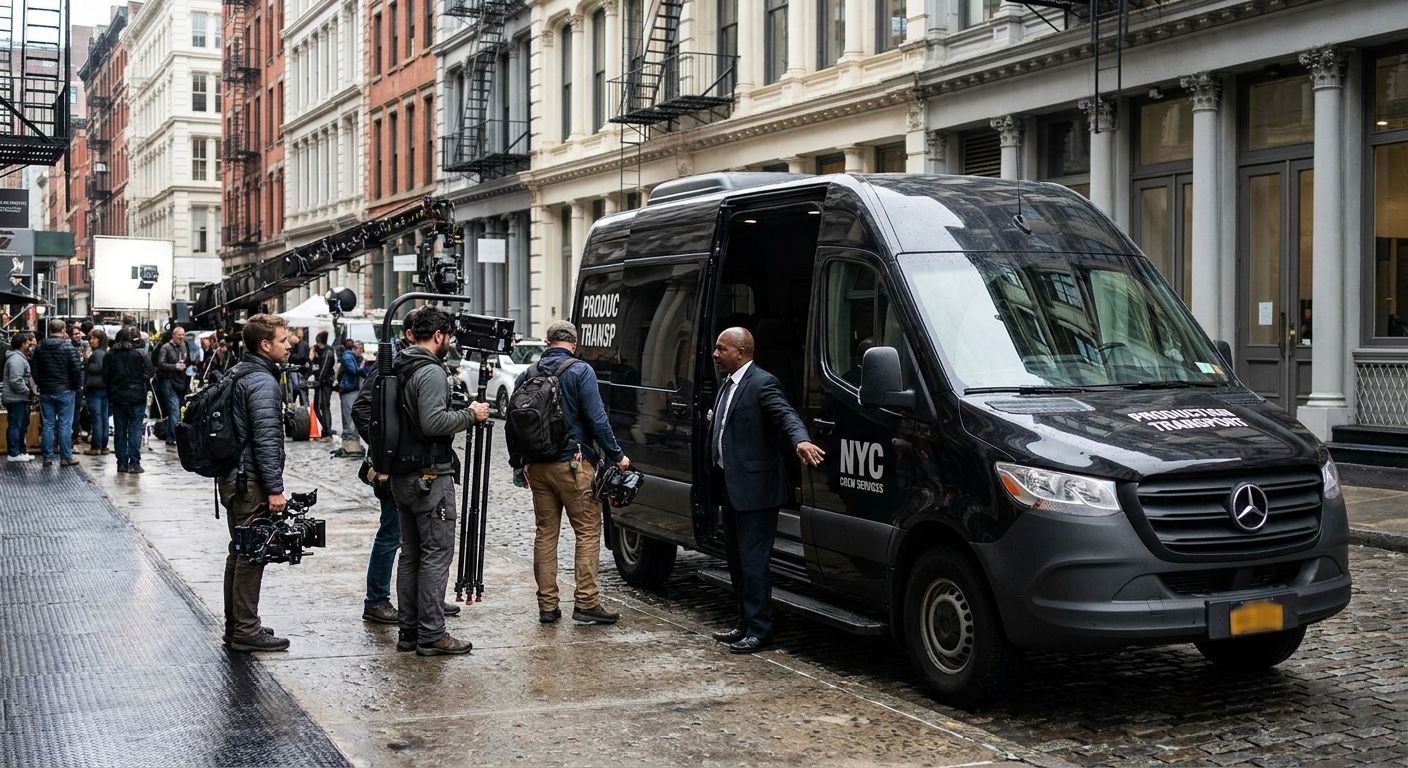
Car service for production crews in NYC is chauffeured ground transportation scheduled around call sheets, gear loads, and lockup times rather than fixed pickup windows. Film and TV shoots don't run on airport-transfer logic — a 5 AM crew call, a 200-pound grip cart, and a director who needs to leave set the second wrap is called all demand a different booking approach than a standard black car pickup.
- Tri-State Chauffeurs runs car service for production crews NYC-wide with flat rate pricing and no surge fees during long shoot days.
- Executive SUVs and sprinter vans handle gear and crew moves that a standard sedan can't fit in 2026.
- Standing production accounts cut per-ride booking time when call times shift daily.
- Flight tracking matters most for out-of-town cast and department heads flying into NYC for a shoot.
- Verdict: book by vehicle type and buffer time, not by pickup time alone, for reliable set-to-set moves.
Why this matters for production crews
Production schedules change hour to hour. A call sheet issued at 6 PM can shift a 7 AM pickup to 5:30 AM overnight, and a car service that can't absorb that kind of change becomes a line item that costs the production money in delays. Corporate travel service in NYC and NJ built for business accounts already solves half the problem — recurring bookings, invoicing, and drivers who show up early — but production adds gear, headcount swings, and locations that change by the day.
Crews also move in patterns airport transfers don't: hotel to base camp, base camp to set, set back to hotel, sometimes three or four times in one shooting day. A car service that treats every ride as a one-off booking will bleed time production doesn't have.
How to book car service for a NYC production shoot
Book against the call sheet, not the clock
Call times move. Production coordinators who book a single fixed pickup time for a multi-week shoot end up rebooking constantly or eating no-show fees when the schedule shifts.
- Confirm pickup windows the night before against the finalized call sheet
- Ask for a driver contact who can be reached directly, not just a dispatch line
- Build in a same-day adjustment policy for call time changes inside 12 hours
- Flag any early-morning (before 6 AM) or overnight wrap pickups separately
Match the vehicle to the gear list
A sedan works for a single producer running to a meeting. It does not work for a DP hauling a camera cart, C-stands, and a monitor case. Get the gear list from the grip and electric department before booking, not after the van shows up too small.
- Sedans for single-passenger moves with a laptop bag or small kit
- Executive SUV service for department heads traveling with cases and monitors
- Sprinter vans for full crew moves with gear carts and equipment cases
- Wheelchair-accessible vehicles when talent or crew require them
Set up a standing account for multi-week shoots
Production runs on POs and department codes, not one-off credit card swipes. A corporate car service account consolidates every ride under one invoice tied to the production, which makes the line producer's job easier at wrap.
- One monthly invoice instead of dozens of individual receipts
- Flat rate pricing that doesn't spike during 14-hour shoot days or bad weather
- Rides booked and tracked by department or unit, not by individual card
- Dedicated account contact for schedule changes across the shoot
Coordinate cast and crew pickups separately
Talent moves and crew moves have different requirements. Cast pickups often need discretion, a specific vehicle class, and tighter timing around hair and makeup; crew moves are about volume and gear capacity.
- Book hourly chauffeur hire for talent who need a car on standby through fittings, press, or downtime between setups
- Separate dispatch instructions for talent vehicles vs. crew vans
- Confirm discretion expectations directly — production drivers should not be posting call sheets or set locations
- Keep a backup vehicle on call for last-minute cast additions
Build in buffer for wrap-time uncertainty
Wrap almost never happens on schedule. A car service booked for a hard 8 PM pickup that actually wraps at 10:15 PM either leaves crew stranded or racks up wait-time charges nobody budgeted for.
- Ask for open-ended wrap pickups instead of fixed-time bookings when possible
- Confirm whether wait time is billed hourly or flat for delayed wraps
- Keep one vehicle on standby past scheduled wrap for overnight or night-exterior shoots
- Communicate wrap estimates to dispatch as soon as the AD calls it
Confirm curb access and parking near set
NYC set locations rarely have dedicated loading zones. Drivers who don't know the block, the permit situation, or the PA holding the corner will circle and burn time crew needs for the next setup.
- Share the location manager's parking plan with dispatch before pickup day
- Confirm which cross streets allow standing for pickup and drop-off
- Route around known lockup blocks and street closures tied to the shoot permit
- Give drivers a direct line to a PA or 2nd AD on location
Track flights for out-of-town cast and department heads
Productions fly in directors, cast, and department heads from LA and other markets constantly. A driver who isn't tracking the actual flight — not the scheduled time — ends up either late or waiting two hours at baggage claim on the production's dime.
- Confirm flight tracking is built into the booking, not a manual check
- Request a meet-and-greet inside the terminal for first-time NYC arrivals
- Have a backup vehicle ready for delayed or diverted flights during peak shoot weeks
- Coordinate arrival pickups with the production coordinator's hotel and call time schedule
Set up a production account
Flat rate pricing and flight tracking for cast and crew moves across NYC in 2026.
Comparison: vehicle options for production crews
| Vehicle type | Best for | Key limitation |
|---|---|---|
| Sedan / black car | Single producer or exec moves, no gear | Can't fit camera carts or multiple passengers |
| Executive SUV | Department heads with cases, small talent moves | Limited cargo room for full grip/electric loads |
| Sprinter van | Full crew transport with gear carts | Requires more curb space to load near set |
| Wheelchair-accessible vehicle | Talent or crew requiring accessible transport | Fewer units in rotation, book ahead of shoot dates |
| Standing account (any vehicle) | Multi-week or recurring shoots | Requires setup lead time before day one |
Verdict: sprinter vans handle full crew moves best, executive SUVs cover department heads and small talent groups, and a standing account beats one-off booking on any shoot running longer than a week.
Common mistakes production crews make booking car service
- Booking one vehicle size for the whole crew. Grip and electric need van capacity; a single producer doesn't. Mixed department needs get mis-booked into one vehicle type by default.
- Ignoring wrap-time variability. Fixed pickup times built for an 8-hour office day don't survive a 14-hour shoot day that wraps three hours late.
- Skipping location logistics with dispatch. Drivers who don't get parking and curb access details before pickup day waste crew time circling the block.
- Booking talent and crew through the same undifferentiated request. Cast moves need discretion and standby flexibility; crew moves need volume and gear space. Treating them the same causes scheduling conflicts.
- Not setting up an account before the shoot starts. One-off bookings across a multi-week production create invoicing chaos for the line producer at wrap.
FAQ
What's the best car service for production crews in NYC?
A car service running flat rate pricing with sprinter vans, executive SUVs, and flight tracking covers most production needs in 2026 — crew gear moves, talent pickups, and out-of-town cast arrivals all need different vehicle types from the same provider.
Can a car service handle a multi-week shooting schedule?
Yes, a standing corporate account lets production book recurring pickups against a changing call sheet and consolidates every ride into one invoice instead of dozens of separate receipts.
How much notice does a production need to book crew transportation?
Book vehicle type and volume as soon as the shooting schedule is locked, then confirm exact pickup times the night before against the final call sheet since call times shift inside 24 hours regularly.
Do production car services track flights for cast arriving in NYC?
A car service built for production and corporate travel tracks the actual flight status, not the scheduled time, and adjusts pickup for delays automatically rather than requiring a manual check-in.
What vehicle fits a full camera and grip package?
A sprinter van fits gear carts, C-stands, and multiple crew members in one move; a sedan or standard SUV does not have the cargo capacity for a full grip and electric load.
Is hourly chauffeur service worth it for talent on set?
Hourly chauffeur hire keeps a vehicle on standby through fittings, hair and makeup, and gaps between setups, which avoids re-booking a new ride every time talent needs to move.
How does billing work for wrap times that run late?
Confirm upfront whether wait time past scheduled wrap is billed hourly or included flat, since NYC shoot days routinely wrap two to three hours later than the call sheet projects.
Does a production car service handle wheelchair-accessible needs?
Yes, wheelchair-accessible vehicles should be booked in advance of shoot dates since fewer units are typically in rotation compared to standard sedans and SUVs.
One last thing
The detail productions overlook most isn't the vehicle — it's the driver's familiarity with the block. A driver who knows which cross streets allow standing near a Manhattan set saves more crew time over a multi-week shoot than upgrading every vehicle to a bigger van. Tri-State Chauffeurs has run over 240,000 rides since the company started as a family-owned operation in 2003, and that kind of route familiarity across NYC, NY, NJ, CT, and PA is what keeps a 14-hour shoot day from losing an extra hour to a blocked loading zone.