
Choose a same day medical appointment car service by confirming live availability, vehicle fit, pickup instructions, return-trip handling, and a direct dispatch contact before you book. In 2026, the right provider is the one that can clearly explain who will arrive, where the driver will meet you, and what happens if the appointment ends earlier or later than expected.
- A same day medical appointment car service should confirm the driver, vehicle, pickup point, and return plan.
- Tri-State Chauffeurs serves individuals and businesses across NYC, NY, NJ, CT, and PA.
- Choose a regular chauffeur service only when the passenger does not need medical monitoring during the ride.
- State every mobility need before booking; never assume the vehicle or driver provides physical assistance.
Why this matters
A same-day medical visit leaves little room to correct a vague reservation. The non-emergency medical appointment chauffeur service guide explains the broader trip-planning issues, but a same-day request puts extra pressure on driver availability, vehicle selection, and communication.
The distinction between transportation and medical care also matters. A standard chauffeur transports passengers; the service should not be treated as an ambulance or a source of medical monitoring unless the provider explicitly says otherwise. If the passenger needs clinical observation, a stretcher, physical transfer assistance, or medical equipment managed during the ride, contact the medical facility for the appropriate transportation category.
Tri-State Chauffeurs car service is best for individuals and businesses arranging prebooked chauffeur transportation across NYC, NY, NJ, CT, and PA without a need for clinical care during the ride. The stated service area is broad, but availability for a specific 2026 same-day request still needs direct confirmation.
How do you choose a car service for a same-day medical visit?
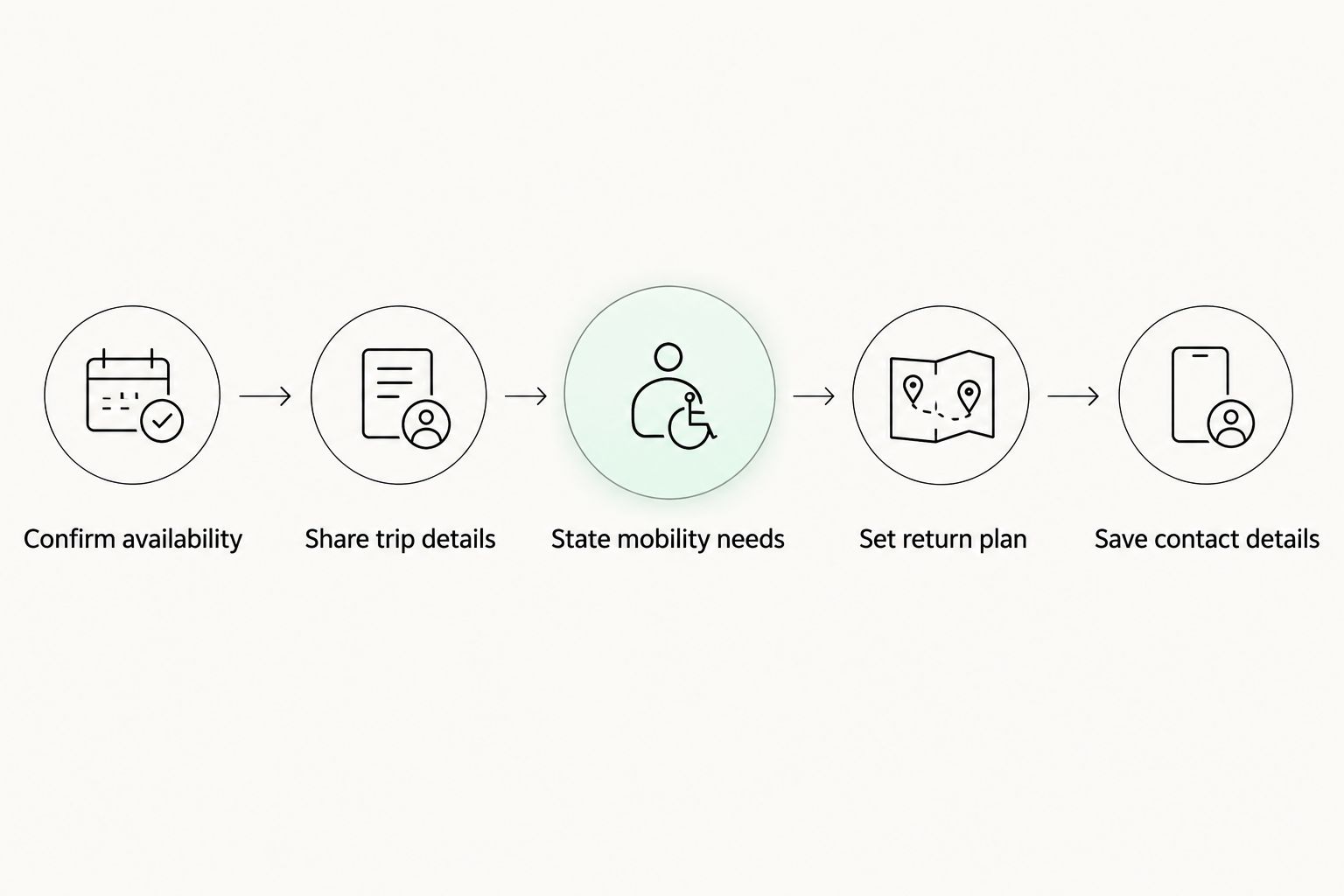
Use the following sequence as soon as the appointment is confirmed. Each step closes a gap that can otherwise cause the wrong vehicle, a missed entrance, or uncertainty after the visit.
1. Confirm live availability
Call the provider and ask whether a driver and suitable vehicle can be assigned to your exact pickup window. An automated request receipt is not the same as a confirmed reservation.
Ask how final confirmation is delivered and which contact handles changes. You should finish the call knowing whether the ride is accepted, not merely submitted. If nobody can confirm the booking status, continue contacting providers rather than assuming a driver will appear.
2. Share the complete trip details
Give the pickup address, medical facility, appointment check-in time, passenger name, and a working mobile number. Use the check-in time rather than only the clinical appointment time because the facility may require registration before the visit.
Identify the correct building and entrance when a hospital or medical campus has several drop-off points. A street address alone can lead the driver to an emergency entrance, parking structure, or building on the opposite side of the campus.
3. State every mobility need
Tell the dispatcher whether the passenger walks independently or uses a cane, walker, folding wheelchair, power wheelchair, or mobility scooter. Also state whether a companion will travel and whether any personal equipment needs cargo space.
Do not assume wheelchair accessibility from the words car service. Ask whether the proposed vehicle fits the mobility device and whether the service is curb-to-curb or includes assistance between the door and vehicle. If physical lifting or transfer help is required, say so before booking; a standard chauffeur may not provide it.
4. Match the vehicle to the passenger
A passenger who enters and exits a car independently may only need a standard chauffeured vehicle. A folding walker, wheelchair, companion, or multiple bags can change the required passenger and cargo space.
Ask the dispatcher to confirm the vehicle category after hearing the full mobility description. Do not select a smaller vehicle just because the trip is short. Entry height, door opening, seating position, and storage space matter more than route length.
5. Set the return plan
Decide whether the driver should wait, leave and return at an agreed time, or remain available for an on-call pickup. Never assume waiting is included. Ask how you should report that the appointment is finished and how much notice dispatch needs before sending the vehicle back.
Medical visits rarely end at a perfectly predictable moment. A clear return process prevents the passenger from leaving the facility without knowing whether the driver is nearby, returning later, or waiting at another entrance.
6. Save the contact details
Keep the dispatch number and any driver contact sent with the confirmation. The passenger and the person arranging the ride should both have the details when different people are involved.
Confirm how the driver will identify the passenger and where communication will happen. This is especially important when the rider has limited mobility, does not use text messaging, or will be inside a large medical complex with several pickup zones.
7. Review the confirmation
Check the date, pickup location, destination, check-in time, passenger count, vehicle category, mobility notes, and return arrangement. Correct mistakes immediately.
The checklist in this guide to booking a black car for a same-day appointment adds more detail for urgent reservations. In 2026, the safest booking is the one documented clearly enough that the passenger, dispatcher, and driver are working from the same plan.
Which transportation option fits the visit?
A chauffeured car, rideshare or taxi, and specialized medical transportation solve different problems. Compare the passenger's condition and assistance needs before choosing.
| Option | Best for | Main advantage | Main limitation |
|---|---|---|---|
| Chauffeured car service | Passengers who can travel without clinical care | A prearranged driver, vehicle, and dispatch contact | Accessibility and physical assistance must be confirmed |
| Rideshare or taxi | Independent passengers making a straightforward trip | On-demand request process | Driver, vehicle, and waiting arrangements can change |
| Specialized medical transportation | Passengers who need mobility support beyond a regular car ride | Service designed around stated medical or transfer needs | Eligibility, equipment, and scheduling requirements vary |
| Ambulance service | Passengers who require medical monitoring or emergency care | Clinical response and medically equipped transportation | Not a substitute for ordinary appointment transportation |
A Tri-State Chauffeurs chauffeur service belongs in the first category: limousine, car, airport, corporate, event, and group transportation are stated services, while clinical transport is not. Its brand information cites more than 240,000 rides, a 5-star Google rating, and family ownership since 2003. Those credentials help establish operating history, but they do not replace confirmation of the exact vehicle and assistance required for a 2026 medical visit.
Choose specialized medical transportation or an ambulance when the passenger's needs extend beyond safe entry, seating, travel, and exit from a standard passenger vehicle. A regular chauffeur is not a medical attendant.
Why same-day availability varies
Same-day availability is not a single yes-or-no condition. It depends on whether the provider has the right driver and vehicle near the pickup point at the required time.
- Pickup location: A provider may cover a large region without having an unassigned vehicle near every address at every moment.
- Destination and route: A local office visit uses a different portion of the schedule than a longer interstate trip.
- Vehicle requirements: A standard passenger vehicle and a vehicle suitable for a mobility device are not interchangeable.
- Passenger count: A companion, caregiver, or family member needs a confirmed seat and may change the vehicle category.
- Mobility equipment: Walkers, wheelchairs, scooters, and personal medical items require different storage and access arrangements.
- Return-trip structure: Waiting, a scheduled return, and an on-call return each affect driver scheduling differently.
- Facility access: Multiple entrances, security procedures, restricted loading areas, and large campuses can complicate the pickup plan.
For a 2026 same-day request, call as soon as the appointment is known. Do not wait for the ride itself to become urgent before describing the passenger's mobility needs or the facility layout.
What should you ask before confirming the ride?
Use direct questions that require specific answers:
- Is the ride confirmed or only requested?
- What vehicle category is assigned?
- Does that vehicle fit the passenger and mobility equipment described?
- Is the service curb-to-curb, or does the driver provide any additional assistance?
- Where exactly will the driver meet the passenger?
- How will the passenger receive driver details?
- What happens if the appointment runs longer than expected?
- Is the return ride scheduled, on call, or not yet reserved?
- Who should the passenger contact if the facility changes the exit location?
A provider that cannot answer these questions has not completed the planning needed for a time-sensitive medical ride. Verbal confidence is not a substitute for a clear confirmation containing the trip details.
Ask about today's medical ride
Share the route, check-in time, passenger count, and mobility needs before confirming.
Can you book a car service on the day of the appointment?
Yes, you can request a car service on the day of a medical appointment, but the provider must confirm current driver and vehicle availability. Same-day does not mean immediate, and a submitted form does not guarantee assignment.
Call rather than relying only on a passive online request. Give the complete route and mobility details during the first conversation so dispatch can evaluate the correct vehicle without another round of questions.
Should the driver wait during the medical visit?
The driver should wait only when the provider confirms that arrangement and it fits the expected visit. Waiting can simplify the return trip, but an appointment with an uncertain end time may be better handled through an agreed on-call or scheduled return process.
Ask where the driver will wait and how the passenger should signal that the visit is over. If a caregiver is coordinating the trip remotely, decide who will make that call before the passenger enters the facility.
What if the passenger uses a walker or wheelchair?
Tell the provider the exact mobility device and whether it folds before accepting the vehicle assignment. A mobility device affects cargo space, entry, seating, and the type of help the passenger may require.
The guide to car service for seniors and mobility-limited travelers covers related planning questions. If the passenger cannot transfer into a standard seat or needs physical lifting, contact the facility or an appropriate medical transportation provider rather than assuming a chauffeur can assist.
FAQ
What is a same day medical appointment car service?
A same day medical appointment car service is a chauffeured ride requested and confirmed on the same calendar day as a medical visit. It is transportation, not clinical care, unless the provider explicitly states otherwise.
How do I confirm that a same-day medical ride is booked?
Ask the dispatcher to state that the ride is confirmed and to provide the pickup details, assigned vehicle category, and contact process. A request receipt alone does not confirm that a driver has been assigned.
Can a chauffeur wait during a doctor's appointment?
A chauffeur can wait only when the provider agrees to that arrangement. Confirm whether the driver will wait, return at a set time, or come back after an on-call request.
Can I bring a walker or folding wheelchair in a car service vehicle?
You can bring a mobility device when the provider confirms that the assigned vehicle has suitable access and storage. Describe the device before booking rather than waiting until pickup.
Is a chauffeur service the same as non-emergency medical transportation?
No, a standard chauffeur service and specialized non-emergency medical transportation are different categories. Choose specialized transportation when the passenger needs transfer assistance, dedicated accessibility equipment, or care beyond an ordinary car ride.
Does Tri-State Chauffeurs cover medical appointment trips outside New Jersey?
Tri-State Chauffeurs states that it serves individuals and businesses across NYC, NY, NJ, CT, and PA. Confirm availability for the exact pickup, destination, and 2026 travel date before booking.
What information does a dispatcher need for a same-day medical ride?
Provide the pickup address, facility entrance, check-in time, passenger count, mobile contact, mobility needs, vehicle requirements, and return plan. Complete details let dispatch evaluate the request without avoidable follow-up.
One last thing
The building entrance is often as important as the street address. Before the 2026 pickup, check the appointment message or call the facility to identify the correct patient entrance, building name, and pickup zone.
Send those details to both dispatch and the passenger. A correct entrance reduces confusion without requiring the driver to guess which part of a hospital or medical campus the passenger needs.