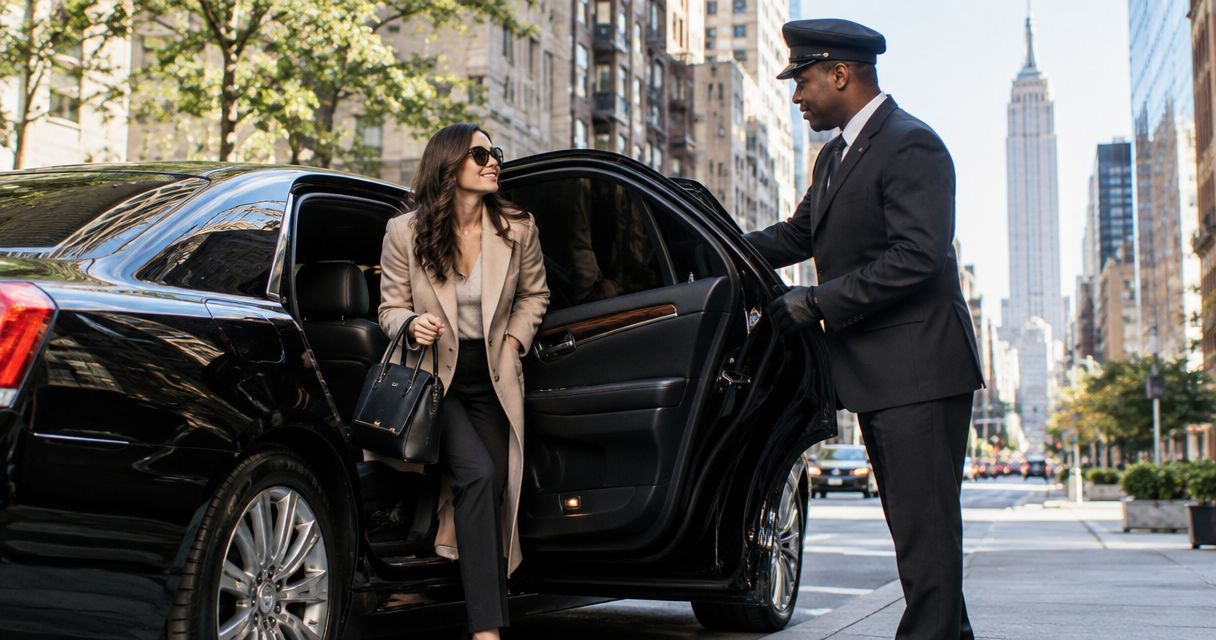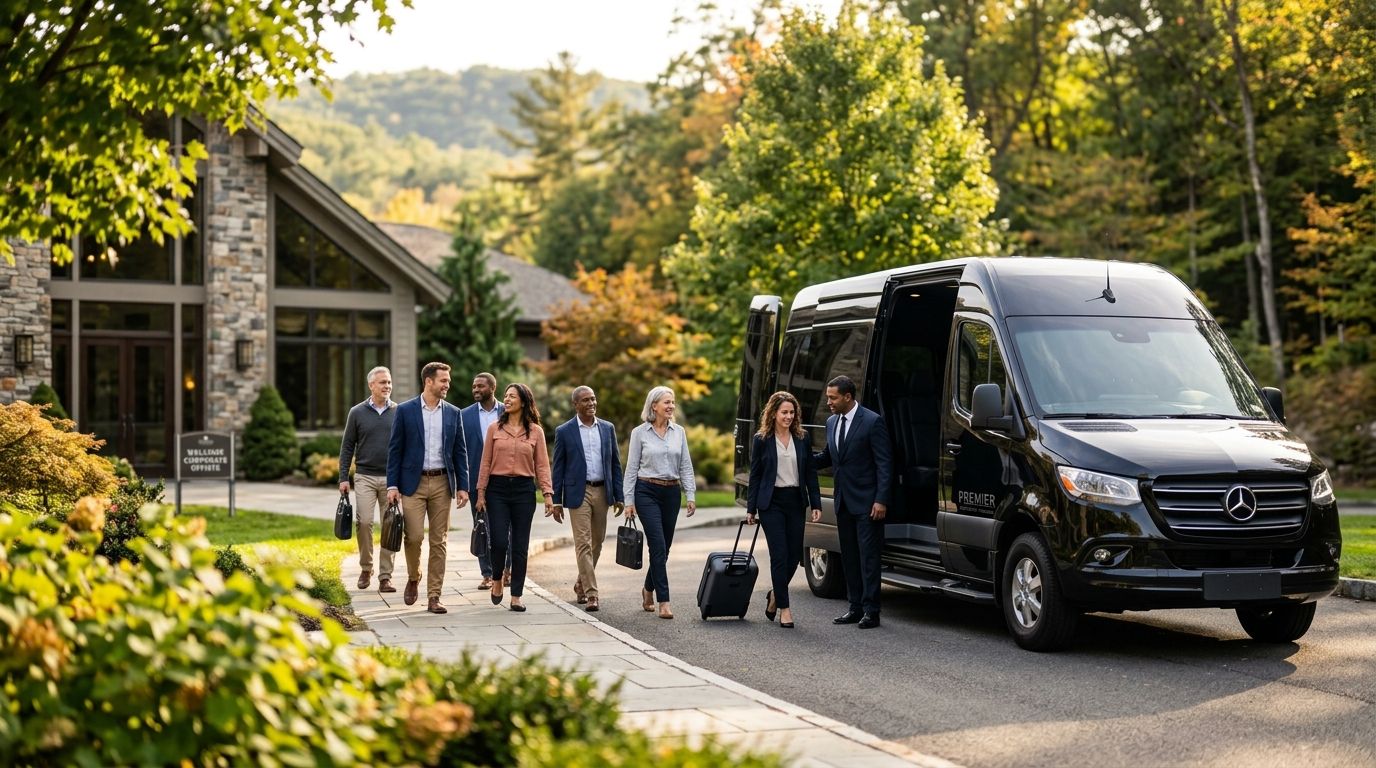
Corporate offsite retreat transportation covers the ground fleet, scheduling, and vehicle mix a company needs to move an entire team between an office, a venue, an airport, and a hotel without gaps in the itinerary. Offsite planners deal with constraints regular corporate car bookers don't: fluctuating headcounts, luggage and AV gear, multiple pickup addresses across NYC and NJ, and a retreat schedule that can shift by hours with one delayed flight.
- Tri-State Chauffeurs runs corporate offsite retreat transportation across NJ, NYC, CT and PA with flat-rate pricing and no surge fees.
- Sprinter vans and party buses cut a 20-person offsite group into one coordinated arrival instead of six separate rideshares.
- Book round-trip and return transportation in the same reservation to avoid scrambling for late-night pickups after dinner runs long.
- A corporate account with fixed billing beats one-off bookings once a company runs more than two offsites a year.
Why offsite retreat transportation matters for corporate planners
An offsite retreat lives or dies on timing. If half the team is late because they're circling for a parking spot or waiting on a rideshare surge, the agenda slips and the retreat budget takes the hit anyway.
Companies planning offsites in 2026 are also dealing with a tighter corridor: teams pulled from Manhattan offices, satellite staff commuting in from NJ counties, and venues that sit an hour outside the city with no reliable transit option. Corporate offsite retreat transportation isn't a convenience line item — it's the scheduling backbone of the day.
The car service for corporate travel in NYC and NJ that companies already use for airport runs and client meetings is the same infrastructure that scales to a 15-person or 60-person offsite — the difference is vehicle mix and coordination, not the underlying service.
Map the guest list and pickup points
Start with a headcount and an address list before you touch a vehicle spec. Offsites rarely pull from one office — you're usually stitching together Manhattan HQ staff, a satellite team in Mercer County, and a few remote employees flying in.
- Split the roster by pickup zone (Manhattan, NJ suburbs, airport arrivals)
- Flag anyone arriving by flight and note their terminal and carrier
- Confirm the venue address and drop-off entrance, not just the town
- Note luggage or equipment volume per rider (laptops, presentation gear, overnight bags)
- Build a buffer of 10-15 minutes per pickup stop into your master schedule
Choose the right vehicle class for group size
Vehicle selection is where most offsite budgets go sideways — planners either overbook a fleet of sedans for a group that needs one van, or squeeze 18 people into a vehicle built for 10.
- Sedans and black cars for executives arriving separately or splitting off for client stops
- SUVs for small leadership groups of 4-6 traveling with bags
- Sprinter vans for teams of 10-14 who need one coordinated arrival
- Mini coaches or party buses for groups of 15+ or multi-stop retreat days
- Always confirm luggage capacity separately from seat count — a full van of 14 with duffel bags rides differently than 14 with just laptop backpacks
For groups landing north of 12 people, the sprinter van rental for NJ group transportation page breaks down capacity by trim, which is the manual work most planners skip until the morning of the retreat.
Lock in flat-rate pricing before the retreat date
Surge pricing on rideshare apps hits hardest exactly when a company needs transportation most: early morning departures, Friday evening returns, and any day with bad weather in the forecast.
- Get a flat-rate quote in writing before the retreat, not the morning of
- Confirm whether the rate covers wait time if a flight or meeting runs long
- Ask if the quote includes both legs — arrival and return — as one booking
- Compare per-vehicle flat rates against per-seat rideshare estimates for the full group, not per rider
The manual alternative here is booking each employee's ride individually and hoping the math works out — it rarely does once six people are each paying surge rates on the same morning.
Build an arrival and departure schedule with buffer time
Retreats run on a schedule that shifts constantly — a keynote runs long, a workshop breaks late, someone's flight lands an hour behind. Your transportation plan needs slack built in, not a single fixed pickup time.
- Set arrival windows in 15-minute blocks instead of one exact time
- Build a 30-minute buffer before any group activity with a hard start time
- Confirm a backup pickup time in case the agenda slips
- Share the schedule with drivers ahead of time, not the morning of
Assign a point of contact and confirm day-of logistics
One person on your team should own transportation day-of — not the same person running the agenda. That contact fields driver calls, handles last-minute headcount changes, and confirms pickup locations in real time.
- Name one internal point of contact with a direct phone line
- Confirm the driver has that contact's number, not a general office line
- Walk the pickup and drop-off points in person if the venue is unfamiliar
- Have a printed or digital roster ready in case a driver needs to confirm names
Set up a corporate account for recurring offsite events
Companies running more than one offsite a year waste time re-quoting and re-booking from scratch every time. A standing corporate account fixes that with consistent billing and priority scheduling.
- Centralize billing under one account instead of individual expense reports
- Lock in the same vehicle types and drivers across repeat events
- Get priority booking windows ahead of peak retreat seasons (spring and fall)
- Skip the requote cycle for each new event
The corporate car service accounts for businesses with frequent travel setup is built for exactly this pattern — companies running quarterly offsites, not a one-off event.
Set up a corporate account for offsites
Fixed billing and priority scheduling for recurring retreat travel.
Plan return transportation and late-night contingencies
Retreats that run into dinner or an evening social event leave planners scrambling for return rides when the group scatters at different times. Book the return leg with the same care as the arrival.
- Confirm the return pickup time covers the latest expected departure, not the average
- Split the return into two waves if half the group leaves earlier than the rest
- Keep a driver on standby for stragglers rather than canceling the reservation early
- Confirm the flat-rate quote covers late-night or after-hours return trips without a separate surcharge
Comparison: transportation options for offsite retreats
| Option | Best for | Key limitation |
|---|---|---|
| Sedan/black car | Executives arriving separately or splitting for client visits | Doesn't scale past 2-3 riders per vehicle |
| SUV | Small leadership groups of 4-6 with luggage | Limited capacity for groups over 6 |
| Sprinter van | Teams of 10-14 needing one coordinated arrival | Less flexible for splitting a group mid-day |
| Mini coach/party bus | Groups of 15+ or multi-stop retreat days | Requires more lead time to reserve for peak dates |
| Rideshare apps (per rider) | One-off, single-rider trips | Surge pricing and fragmented arrival times for groups |
Tri-State Chauffeurs wins for offsite retreats that need one coordinated fleet across NJ, NYC, CT and PA with flat-rate pricing locked in before the event — it's the right call over booking each rider a separate rideshare.
Common mistakes corporate planners make
- Booking one-way trips only. Planners quote the arrival leg and scramble for the return when the retreat runs late.
- Ignoring luggage and AV gear in the vehicle spec. A van rated for 14 seats doesn't fit 14 people plus presentation equipment and overnight bags.
- Using individual rideshares for a group of 10+. Surge pricing hits every rider simultaneously on the same morning, and the group arrives in six separate waves instead of one.
- Skipping the day-of point of contact. Drivers with no direct line to a decision-maker can't adjust for schedule slips.
- Requoting from scratch every event. Companies without a standing account lose time re-negotiating rates each quarter instead of booking against a fixed corporate rate.
FAQ
What's the best transportation option for a 20-person corporate offsite?
A mini coach or party bus is the best option for a 20-person offsite because it moves the entire group in one coordinated trip. Sprinter vans work for groups closer to 12-14 but split a 20-person team into two vehicles.
How much does corporate offsite retreat transportation cost?
Cost depends on vehicle class, group size, and mileage between pickup points and the venue. Flat-rate quotes lock in the price before the event, unlike rideshare apps that fluctuate with demand.
Is a corporate car service better than rideshare apps for offsites?
A corporate car service is better for groups of 6 or more because it avoids surge pricing and coordinates one arrival time instead of fragmented pickups. Rideshare apps work fine for single riders but scale poorly for group events.
Can one company account cover multiple offsite events per year?
Yes, a standing corporate account covers recurring offsites under one billing setup instead of requoting each event separately. This works best for companies running quarterly or biannual retreats.
Do I need to book return transportation separately from arrival?
No, return transportation should be booked in the same reservation as arrival to avoid last-minute scrambling. Confirm the return pickup window covers the latest expected departure time, not just the average.
What vehicle handles a mixed group of executives and staff on the same offsite?
An SUV works for a small leadership group traveling separately, while a sprinter van or mini coach handles the broader staff group. Splitting by vehicle class keeps the schedule flexible if executives need to leave early.
How far in advance should I book transportation for a corporate retreat?
Book at least two to three weeks ahead for standard offsites, and earlier during peak spring and fall retreat seasons. Mini coaches and party buses need more lead time than sedans or SUVs.
One last thing
The detail most planners miss until it's too late: a flat-rate quote should specify whether wait time is included if a flight or meeting runs long, because that's the exact moment a per-mile or per-hour surcharge quietly triples the bill. Ask that question before you sign off on the vehicle, not after the retreat wraps.